Where humans stay in command.
The console for the trust layer
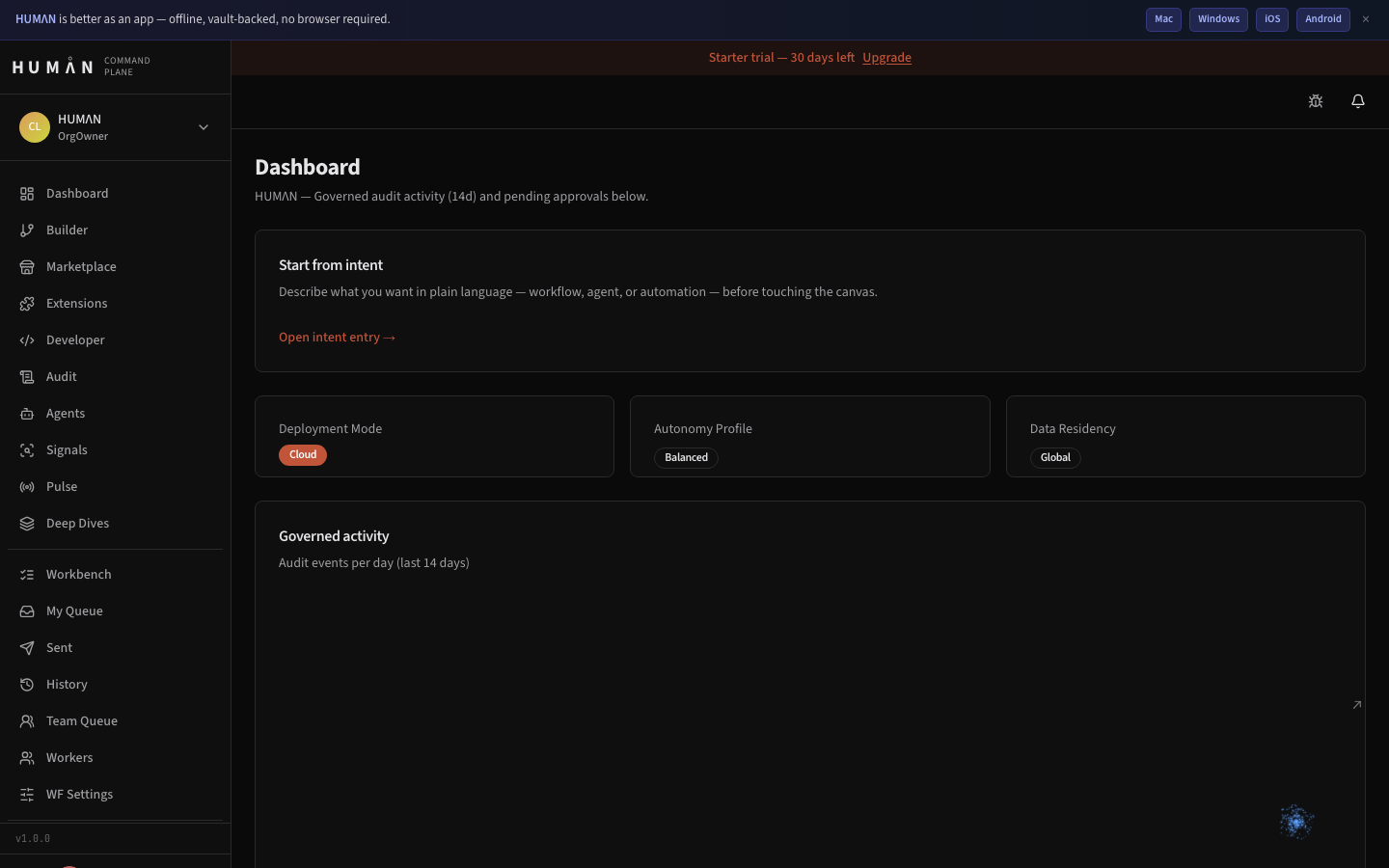
Companion is how you talk to HUMΛN. The Command Plane — HUMΛN Command, in full — is how you operate it: the surface where operators watch live work, approve what needs human judgment, tune policies, and read the receipts. It is the difference between hoping your agents behave and being able to see that they do.
What ships in the console
Dashboard
One view of active work: executions, escalations, incidents, and credits — across every agent and workflow in your org.
Workflow Builder
Compose governed workflows visually — gates, escalation policies, and connector steps on one canvas.
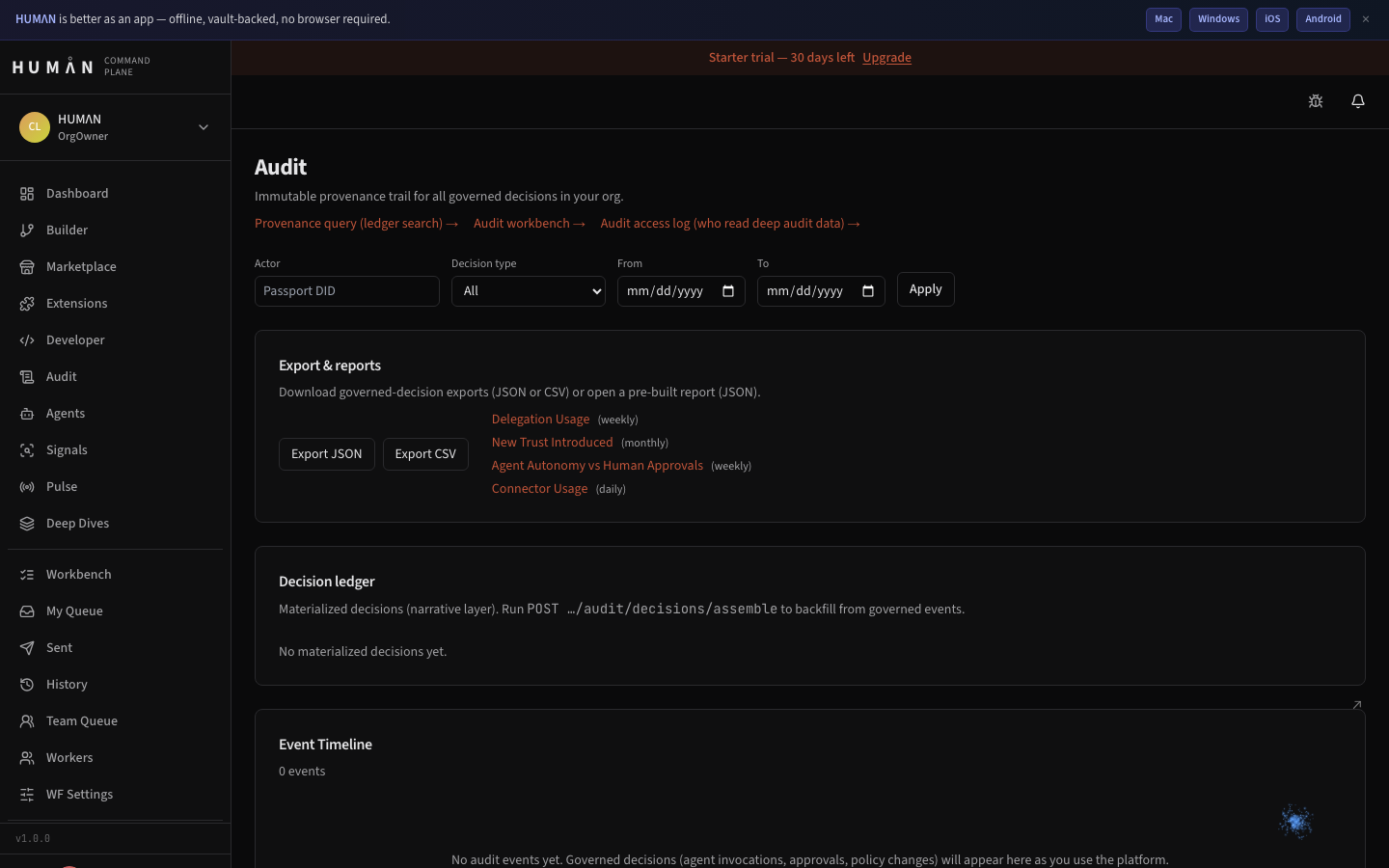
Audit & Decision Ledger
Every consequential decision as one curated, signed narrative — inspectable and contestable, not a raw log dump.
Escalations & Workforce
Queues where qualified humans review, decide, and record outcomes — the reviewer sees exactly what the agent saw.
Marketplace & Extensions
Install governed bundles and extend the console itself — policies and provenance travel with every install.
Learning & Diagnostics
Review HumanOS learning proposals, trace incidents, and watch HUMΛN explain itself.
Receipts you can hand to an auditor
The Decision Ledger turns provenance into narrative: what ran, who approved it, what was overridden, and why — each step signed. Challenge paths are built in, because accountability you cannot contest is not accountability at all.
It is live — go look
The Command Plane runs today at console.haio.run. Open it, click around, and judge the depth yourself.